Muffled hearing or tinnitus can affect every aspect of your life, leaving you feeling disoriented and isolated from the world around you. Many people immediately worry they’re experiencing permanent hearing loss when, in reality, the culprit may be something much more basic: cerumen accumulation.
Differentiating between a wax impaction and actual hearing impairment is vital for identifying if you need a simple removal or a formal audiological exam. There is no reason to feel stressed if sounds seem dampened. A professional evaluation will deliver the final answer, but the following resource details the main variations between wax-related issues and lasting loss.
Recognizing Cerumen Blockage Symptoms
Cerumen is actually a beneficial, natural substance intended to protect the ear canal from particles and foreign debris. Medical issues only manifest when the wax fails to migrate out of the ear, leading to a substantial accumulation or blockage.
Common signs of cerumen impaction consist of:
- A significant reduction in hearing level
- A feeling of pressure or blockage in the ear
- Ear discomfort or mild pain
- Buzzing in the ear (tinnitus)
- Instances of clearer hearing following a yawn or chewing
A signature of wax-induced sound changes is asymmetry, usually impacting one side over the other. The good news is that professional clearance usually ends in an instant return of your natural hearing capacity.
How Hearing Impairment Typically Presents
Unlike a brief obstruction, nerve-based hearing deficit usually progresses slowly over decades and is not resolved by cleaning the ear.
Markers of permanent auditory decline often involve:
- Challenges with word clarity in busy or noisy settings
- Constantly asking others to repeat themselves
- Turning up the television or smartphone audio louder than people prefer
- Difficulty detecting high-frequency sounds
- A symmetrical decrease in hearing ability in both ears
Contrasted with earwax buildup, hearing loss doesn’t usually cause a sensation of obstruction or fullness.
Quick Guide: Earwax vs. Auditory Decline
While evaluating cerumen impaction vs. hearing loss, a few clues can help guide you in the right direction:
- Development: Cerumen dampening can be rapid, but lasting loss requires decades
- Duration: Wax issues are fixable and temporary, whereas loss is usually long-term
- Markers: Pressure points to a clog; difficulty with word clarity points to impairment
- Ear Balance: One-sided dull sound suggests cerumen, while bilateral suggests impairment
The Risks of DIY Cerumen Removal
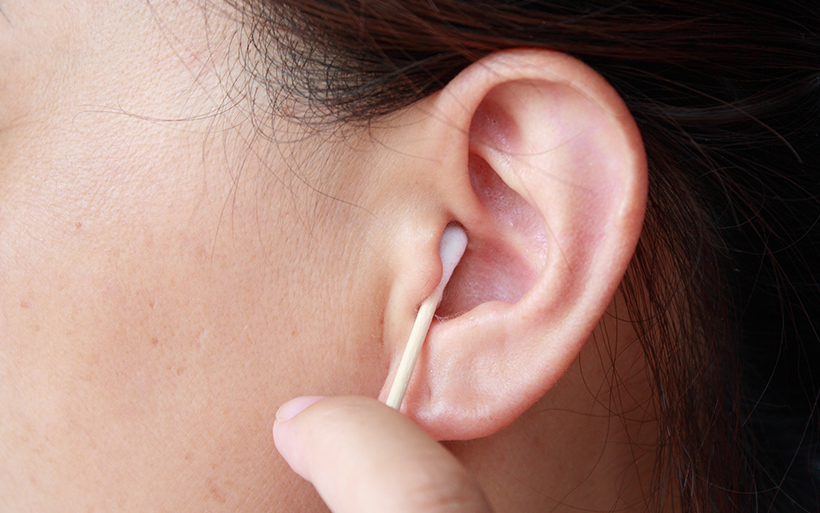
When auditory input feels dampened, the natural urge is to use a cotton bud, but this is frequently a hazardous decision. Regrettably, these can shove wax further in and worsen the problem.
Medical research indicates that DIY removal often leads to accidental damage or increasingly difficult-to-treat impactions.
On the flip side, presuming a concern is merely wax when it is truly hearing loss can prevent you from obtaining the help you need to stay connected.
The Importance of a Professional Ear Exam
A clinician can use an earlight to immediately see if a physical blockage is visible.
If wax is found, safe extraction often resolves symptoms on the spot.
If no wax is detected, a formal hearing test will be used to map the type and degree of any hidden loss.
The National Institute on Deafness and Other Communication Disorders (NIDCD) recommends prompt evaluation whenever shifts in auditory function interfere with your daily routine.
Choosing the Right Solution for Improved Hearing
Muffled auditory input doesn’t always mean irreversible trauma.
Frequently, the issue is merely an accumulation of wax that can be quickly resolved.
Obtaining expert care guarantees you find the exact cause and the proper remedy or hearing aid for your auditory needs.
Keep in mind: The sole reliable way to distinguish the difference between earwax buildup and hearing loss is with a clinical evaluation.
Addressing the issue immediately stops the stress of the unknown and puts you on the track to better hearing.
Instead of wondering what is amiss, book a quick consultation with our audiologists to uncover the truth.
