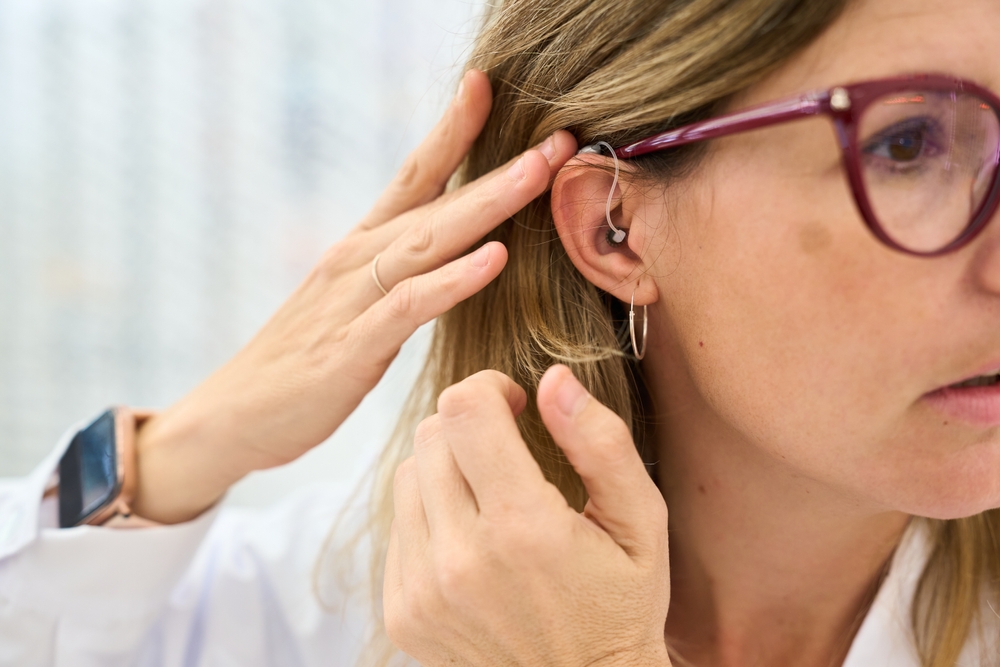
Many people delay getting hearing aids because they don’t think they’ll like how they look or feel. That defensive reaction is totally logical from a consumer standpoint! Regrettably, some people even experienced social alienation because acquaintances falsely assumed that wearing a visible aid signaled a complete inability to comprehend spoken dialogue.
This obsolete perception remains deeply embedded in the public consciousness, creating a massive barrier to proactive treatment. But the reality is that today’s modern hearing aids look and feel very different from what you might expect. Revolutionary breakthroughs in micro-component miniaturization and ergonomic design have rendered these devices incredibly compact, ultra-lightweight, and virtually unnoticeable.
Should your reluctance stem entirely from memories of obsolete, bulky hardware, you owe it to yourself to discover current medical advancements.
The Outdated Devices of Your Imagination Have Been Replaced
If you close your eyes and picture a hearing aid, you might imagine something large, hooked over the ear, and visible from across the room. If that description matches your mental model, your perceptions are anchored in the primitive analog technology of the late twentieth century.
Since then, the entire category has evolved. Advances in miniaturization, design, and digital technology have completely reshaped what hearing aids look like today. Today’s instruments are profoundly smaller, remarkably streamlined, and strategically engineered to blend flawlessly into your natural anatomy or vanish altogether.
A substantial percentage of contemporary options reside deep within the auditory canal, ensuring absolute invisibility during routine face-to-face interactions. Alternatively, post-auricular models are constructed with such streamlined dimensions that they disappear against the scalp, customizable to complement individual skin and hair coloration.
Navigating Modern Hearing Technology: The Three Core Styles Evaluated
For those investigating what these advanced acoustic tools look like in real life, consider this straightforward guide:
Invisible-in-Canal (IIC) Technology
This specific configuration offers the highest degree of user discretion. The IIC style fits exclusively within the deep internal canal and is built using a custom impression of the patient’s ear passagographic anatomy. Spoken interactions at arm’s length occur without anyone realizing a medical device is present. They’re a popular choice for people with mild to moderate hearing loss who prioritize subtlety.
The Versatile Receiver-in-Canal (RIC) / Receiver-in-the-Ear (RITE) Style
This is the most common style today. The system utilizes an incredibly small housing resting behind the ear, linked by a hair-thin translucent cable to a miniature speaker within the ear pathway. To a casual observer, their clean lines often mimic high-end commercial wireless earbuds. Surrounding individuals will remain completely unaware of the technology unless they actively look for it.
Traditional Behind-the-Ear (BTE) Reimagined
This style positions the main component body post-auricularly, offering a slightly larger footprint that remains beautifully sculpted and sleek. Frequently utilized to remediate severe-to-profound auditory loss, they maximize gain and processing capability while maintaining a highly professional, low-profile aesthetic.
The bottom line is simple: modern assistive hearing systems are crafted to serve your life quietly, not to draw attention to your ears.
How Current Hearing Technology Outperforms Traditional Amplifiers
The recent metamorphosis of hearing instruments extends far beyond mere cosmetic downsizing. Today, they function more like smart devices than traditional medical equipment. A vast majority feature native Bluetooth connectivity, enabling seamless, wireless streaming of telephonic communication, media, and television audio directly into your auditory pathway.
Through proprietary mobile apps, patients can effortlessly adjust acoustic thresholds or modify directional settings completely hands-free. If you enter a chaotic, crowded room, you can optimize your digital noise reduction settings to isolate speech within seconds. Convenient overnight charging systems have permanently replaced the tiny disposable batteries that patients traditionally struggled to replace. The process is as simple as placing the units into their charging dock each night, identical to charging your cell phone.
Empowerment Over Hesitation: Redefining Hearing Health Care
Even knowing all of this, it’s easy to hesitate. Acknowledging a sensory deficit and investigating rehabilitation options often forces a difficult confrontation with our own vulnerability and bodily changes. Such moments frequently spark an uncomfortable sense of vulnerability, as though we are losing command over our physical frames.
Let’s reframe this narrative completely: acquiring a modern acoustic instrument is not an admission of weakness. They’re simply a sign of change, which happens to us all. Choosing to hear better is absolute evidence that you are choosing to optimize your body and enhance your overall quality of life.
Consider the profound joy of wearing a tiny, unnoticeable device that lets you confidently command group discussions, master noisy environments, and immerse yourself in what matters most. Talk about empowering!
Schedule Your Personal Demonstration of Today’s Top Styles
The easiest way to let go of that outdated mental image is to check out for yourself what’s available. We encourage you to drop by our office, address your concerns, and hold these miniature devices yourself with zero sales pressure. Think of your visit as an educational open-house to experience the lightweight engineering of modern hearing instruments firsthand.
Almost every visitor walks out completely shocked by how weightless, ergonomic, and cosmetically invisible these tools are in practice! Do not let outdated myths delay your wellness—call our specialized practice or book your appointment online today.
