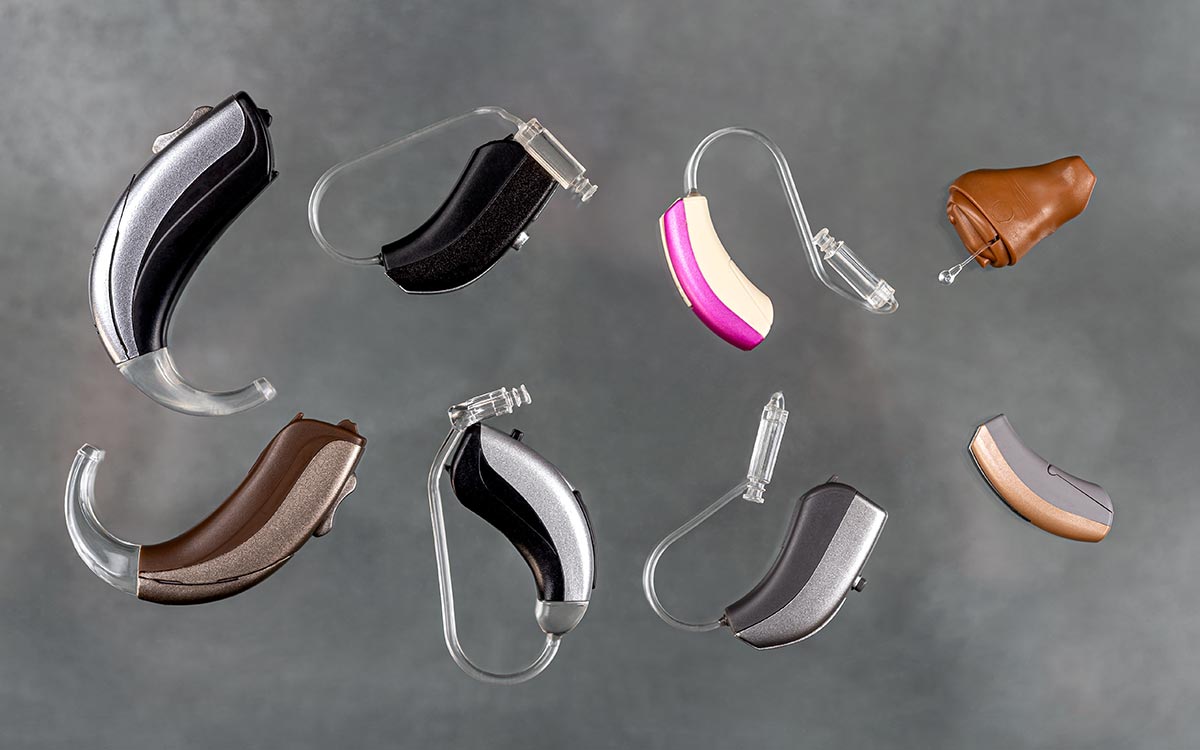
With so many choices in terms of size, style, and technology, the process of picking an instrument can feel quite intense. Rest assured that there is an assistive device customized to every lifestyle and degree of impairment. It’s just a matter of locating it!
Gaining a clear picture of common hearing aid categories will empower you to make a wise decision for your hearing health. Today, we’re breaking down the different hearing aid styles and what makes each one unique.
In-the-Canal (ITC) Hearing Aids
The Design:
ITC models are custom-made to sit within the ear canal, though an inconspicuous part of the shell remains visible in the ear’s outer portion.
Key Primary Features:
- Offers an improved shape than bulkier behind-the-ear units
- Individualized molding guarantees long-term wearing comfort
- Appropriate for mild to moderate hearing loss
Because they offer both discretion and useful features, ITC models are an excellent pick for those new to hearing technology.
IIC (Invisible-in-Canal) Technology
Core Characteristics:
These are the smallest custom-made devices on the market today. This style fits deep in the ear for an entirely covert appearance.
Primary Motivations:
- Maximum cosmetic discretion
- Provides realistic audio because of where the device sits
- Lightweight and easy
IIC devices are mainly targeted at patients with moderate hearing needs who want their technology to remain completely unnoticed.
Full and Partial ITE Varieties
Structural Data:
ITE devices are built to stay in the outer ear area, offering two different shell sizes based on your anatomy. Every device is specifically personalized to match your ear’s unique shape.
Why people select them:
- The larger size makes it possible to include more internal components and longer-lasting batteries
- The physical size is easier to hold and adjust for users with fine motor concerns
- Effective for mild to severe hearing loss
Users often select these models for their straightforward, single-piece construction that avoids any external wiring or tubing.
Traditional BTE Models
Description:
Positioned firmly on the back of the ear, BTE models sit on the outer ridge. Sound moves into the ear canal through an internal tube or custom earmold.
Common Reasons:
- Known for being exceptionally adaptable and robust
- Useful for almost every level of hearing impairment
- The spacious housing enables high-tech extras and built-in power cells
If you require a sturdy hearing aid that is simple to operate and offers high-power output, the BTE style is ideal.
RIC (Receiver-in-Canal) Overview
What they are:
In a modern model, the speaker is detached from the main casing and placed inside the canal via an ultra-fine wire.
Key Pros:
- Minimizes the “plugged up” feeling for more natural hearing
- Compact, lightweight, and comfortable
- Flexible enough to treat a broad number of hearing impairments
The combination of design and high-end performance makes RIC models an ideal choice in the modern market.
Extended-Wear Device Facts
What they represent:
A hearing specialist places these specialized hearing aids deep into the canal, where they stay for multiple weeks.
Why people choose them:
- Perfect for users who want to bypass the routine of handling hearing aids daily
- Sitting deep in the canal makes them completely hidden from view
- Engineering allows them to remain in the ear during all facets of daily life
If you want a hearing solution that requires zero daily thought, the extended-wear style is perfect.
Smart Hearing Aids with Wireless
Digital Attributes:
Auditory aids with wireless connectivity that pair with smartphones, tablets, computers, and sometimes TVs.
Digital Benefits:
- Turn your hearing aids into wireless headphones for all your favorite audio
- Provides a discreet way to manage your hearing environment from your mobile screen
- Enhances everyday life by making technology interaction seamless and clear
You can locate Bluetooth capabilities built into an array of form factors, from RIC and BTE to custom ITC designs.
Alternative Surgical Options
What they are:
Middle-ear implants are specialized tools that use mechanical vibration to enhance hearing via the middle ear.
Medical Reasons:
- An accessible route for patients who are unable to wear standard acoustic devices
- Solves the problem of ear discomfort caused by regular hearing aids
Candidates for middle-ear implants must undergo an exhaustive evaluation by an expert specialist.
Finding the Hearing Aid That Fits Your Lifestyle
There is no one single “ideal” hearing aid for hearing loss or tinnitus; rather, there is a best one for you, determined by your medical needs and personal comfort. A hearing professional is your best asset for comparing these options and finding an ideal choice for your daily routine.
Start traveling toward a world of better sound by arranging an appointment with a hearing specialist. Your future of confident interaction starts with this first hearing evaluation.
Sources:
https://www.mayoclinic.org/diseases-conditions/hearing-loss/in-depth/hearing-aids/art-
20044116
https://www.hearinglife.com/hearing-aids/types
https://www.nidcd.nih.gov/health/hearing-aids
